Tomatoes on Mars: How Spirulina and Compost Made It Possible
MDRS Crew 261 successfully grew tomato seedlings in Mars regolith simulant using spirulina biostimulation and compost amendments—research now published in Nature.
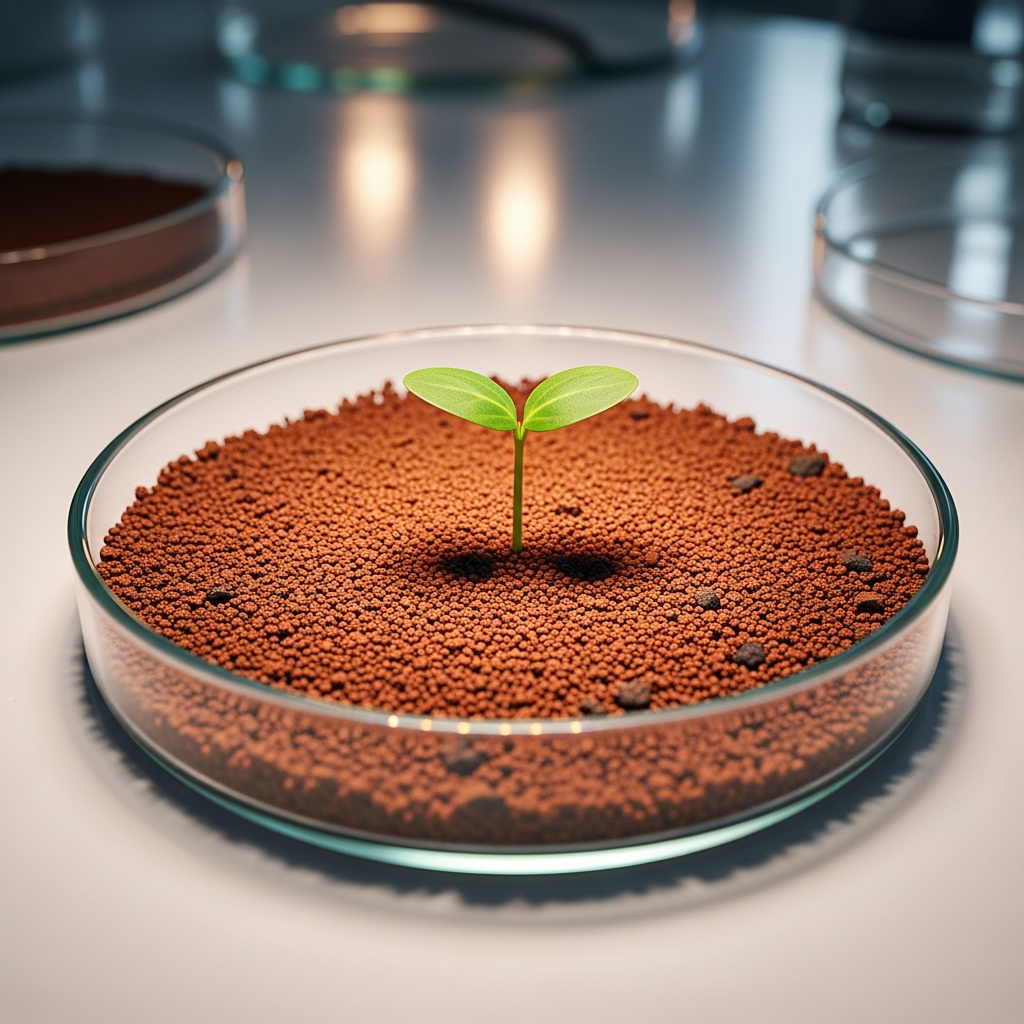
A recent two-week analog astronaut mission at the Mars Desert Research Station (MDRS) in Utah has demonstrated something many thought impossible: growing tomato seedlings directly in Mars regolith simulant. The research, led by biologist Cecile Renaud and engineer Julien Villa-Massone as part of MDRS Crew 261, used a combination of compost amendments and spirulina biostimulation to transform sterile Martian soil simulant into a viable growing medium.
Published in Nature
This research has been peer-reviewed and published in Nature's npj Sustainable Agriculture.
Read the full paper →Why This Matters for Mars Settlement
Any permanent human presence on Mars will require local food production. Shipping food from Earth costs tens of thousands of dollars per kilogram and takes months to arrive—a logistics model that simply doesn’t scale for a permanent colony. Future Martian settlers must grow their own food using available resources.
Mars regolith contains many mineral elements plants need, but it lacks the organic matter, beneficial microbes, and soil structure that make Earth soil fertile. The MDRS Crew 261 experiment addressed this challenge head-on, demonstrating that biological amendments can bridge the gap.
The Role of Spirulina
Central to the experiment was a custom PhotoBioReactor (PBR) designed by Renaud and Villa-Massone with input from Algacraft. The system cultivated spirulina in a controlled environment, providing a renewable source of nutrients and biostimulants for the tomato seedlings.
Spirulina offers several advantages for Mars agriculture:
- Nutrient density — Contains amino acids, vitamins, and growth-promoting compounds
- Rapid reproduction — Can be harvested daily for continuous biostimulant production
- Dual purpose — Serves as both a food source and agricultural input
- Minimal inputs — Requires only light, CO₂, and basic nutrients
The spirulina colony was kept alive not only during the two-week mission but for a full year afterward at the MDRS Science Dome, demonstrating the long-term viability of algae cultivation in analog Mars environments.
Compost: Closing the Loop
The experiment also incorporated compost processed from vegetable scraps using a countertop composter. This demonstrated the closed-loop waste processing essential for Mars habitation—on Mars, every gram of organic matter will be precious, and nothing can go to waste.
By combining regolith simulant with compost and spirulina-based biostimulants, the team created a growing medium that successfully supported tomato seedling germination and growth.
Proving the Skeptics Wrong
Previous crews at MDRS had attempted to grow plants in Mars regolith simulant and consistently failed. The conventional wisdom held that direct regolith cultivation was impossible without extensive soil processing or hydroponics.
The MDRS Crew 261 results challenge that assumption. Their tomato seedlings pushed through the red soil and began to thrive, demonstrating that the right biological inputs can transform regolith into viable growing medium.
Implications for Future Research
This work contributes to our understanding of closed-loop life support systems for Mars missions. Key takeaways include:
- Spirulina as a keystone organism — Its role as both food and agricultural biostimulant makes it invaluable for Mars settlement
- Biological soil remediation works — Compost and microbial amendments can address regolith’s deficiencies
- Long-term system viability — The year-long survival of the spirulina colony suggests such systems are robust enough for long-duration missions
The publication of this research in Nature validates the approach and opens doors for further investigation into bio-regenerative agriculture for space settlement.
MDRS Crew 261, the “Transatlantic Mars Crew,” included Commander James L. Burk, Executive Officer Aline Decadi, Roboticist Erin Kennedy, Health and Safety Officer Audrey Derobertmasure, Biologist Cecile Renaud, Engineer Julien Villa-Massone, and Journalist/Artist in Residence Kris Davidson.